
Heat · Guide · Issue 01
Infrared, full spectrum or traditional: which sauna heat is right for you
Choose the heat before the size: how each kind feels, the power it needs, what it costs to own and run, and who each one suits.
By Julie Myers · · 5 min read

In short. Traditional saunas heat the air to about 150°F to 194°F with steam and need 240V. Far infrared warms you directly in a cooler room, mostly on 120V, and costs the least to own. Full spectrum adds near and mid infrared, some with red light. Choose the heat you will use three times a week.
Before you choose a size, a wood or a set, choose the heat. It decides how the room feels, what power it needs, what it costs and how often you will want to use it. There are three kinds, and each is right for someone.
What is the difference between infrared and traditional saunas?
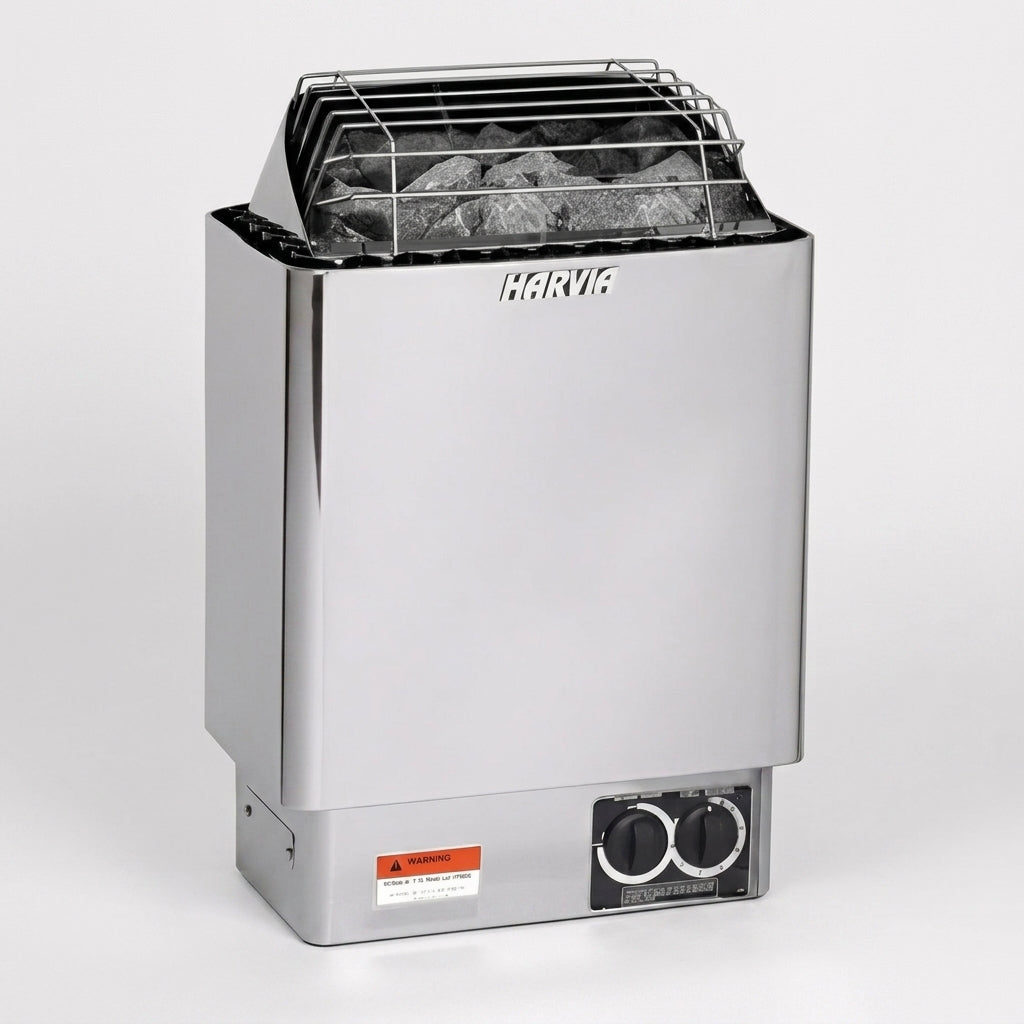
A traditional sauna heats the air. An electric heater warms a bed of stones, the room climbs to 150°F or more, and you ladle water over the stones for a wave of steam. The Revive 2 Person reaches 194°F with its 3.5 kW Harvia heater, per its maker.
An infrared sauna heats you more than the air. Panels give off infrared light that warms your skin and body directly, so the room stays cooler, typically up to about 140°F; the Blisspod Venetian RED tops out at 140°F, per its maker. You still sweat, often a lot, at a temperature many people find easier to sit in.

What is a full spectrum sauna?
Full spectrum is a kind of infrared sauna. A far infrared sauna uses one band of infrared heat. A full spectrum sauna adds near and mid infrared, so the heat feels different at the surface and deeper in, per the makers who build them. Some full spectrum saunas also add a red light panel; our red light sauna guide covers what that light adds and what the research says.
How do the three compare?
- Traditional: hot air and steam, about 150°F to 194°F. Needs a dedicated 240V circuit (20A for a 2 person, 50A hardwired for our 4 person). The traditional saunas we list run $5,200 to $14,000. About $0.64 to $1.45 an hour at full power in our examples. Indoor and outdoor models.
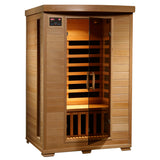
- Far infrared: gentle, dry heat, the room stays cooler. Most plug into 120V on a 15A or 20A circuit. Part of an infrared range of $2,500 to $5,600. About $0.31 to $0.40 an hour in our examples. Mostly indoor.
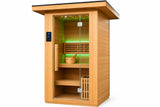
- Full spectrum and red light: near, mid and far infrared, with a red light panel on some models. 120V for our 2 person models, 220V for the 3 person. The top of the infrared range. About $0.42 to $0.52 an hour. Indoor or fully sheltered.
Running costs use the US average rate of 18.16 cents per kWh (EIA, August 2026) and each heater's rating. The thermostat cycles the heater once the room is hot, so most sessions use less.
The best sauna is the one you will use three times a week. Choose the heat you will look forward to.
Which heat is right for you?
Choose traditional if you love real heat and steam, want a sauna outdoors, or grew up with one. Plan for a 240V circuit and a little more budget.
Choose far infrared if you want the simplest install and the lowest cost to own: a 120V circuit, a cooler room, quick assembly. HeatWave infrared models assemble in about 45 minutes, per the maker.
Choose full spectrum or red light if you want the most features in an indoor sauna and like the idea of red light in every session.
Pairing with a cold plunge? Any of the three works. Our guide to choosing a sauna and cold plunge set shows the eight sets we matched, and cold plunge at home covers the cold side.
What does the research say about each?
Much of the long-term research on sauna bathing comes from traditional Finnish saunas, summarized in a 2018 review in Mayo Clinic Proceedings. A 2018 systematic review of regular dry sauna bathing looked at a wider mix of studies. Relaxation is the reason most people give for using a sauna, in the Global Sauna Survey. Our research and sources page lists each study.
Sources
- Laukkanen JA, Laukkanen T, Kunutsor SK. Cardiovascular and other health benefits of sauna bathing: a review of the evidence. Mayo Clinic Proceedings, 2018. DOI
- Hussain J, Cohen M. Clinical effects of regular dry sauna bathing: a systematic review. Evidence-Based Complementary and Alternative Medicine, 2018. Full text
- Hussain JN, Greaves RF, Cohen MM. A hot topic for health: results of the Global Sauna Survey. Complementary Therapies in Medicine, 2019. PubMed
- Price bands: our infrared and traditional sauna collections, listed prices read November 11, 2026. Heater ratings, temperatures and power: each maker's specifications on our product pages.
- Electricity rate: US Energy Information Administration, average residential price, August 2026.
For adults. Check with your doctor before starting any heat or cold routine. General wellness information, not medical advice. The published research on heat and cold is on our research and sources page.
Written by Julie Myers and the Elysiums Luxe team. Specs and prices come from each maker and our live product pages, checked on the date above.